With remarkable visual force, “Costume Jewelry” stages the history of American costume jewelry. At the same time, ideas of freedom, style, and social ascent become visible. What is most compelling is what the images suggest but do not fully articulate.
Aesthetics as Narrative Structure
The large-format volume brings together a significant private collection of American costume jewelry and places this commercially driven phenomenon within an art-historical frame. Text and image composition trace a line from the 1920s into the postwar era. The material is aestheticized more than it is problematized. Jewelry appears primarily as an instrument of female self-fashioning, while economic and social dependencies remain in the background. The result is a curated historiography that draws clear lines and allows certain structural ruptures to appear only in passing.
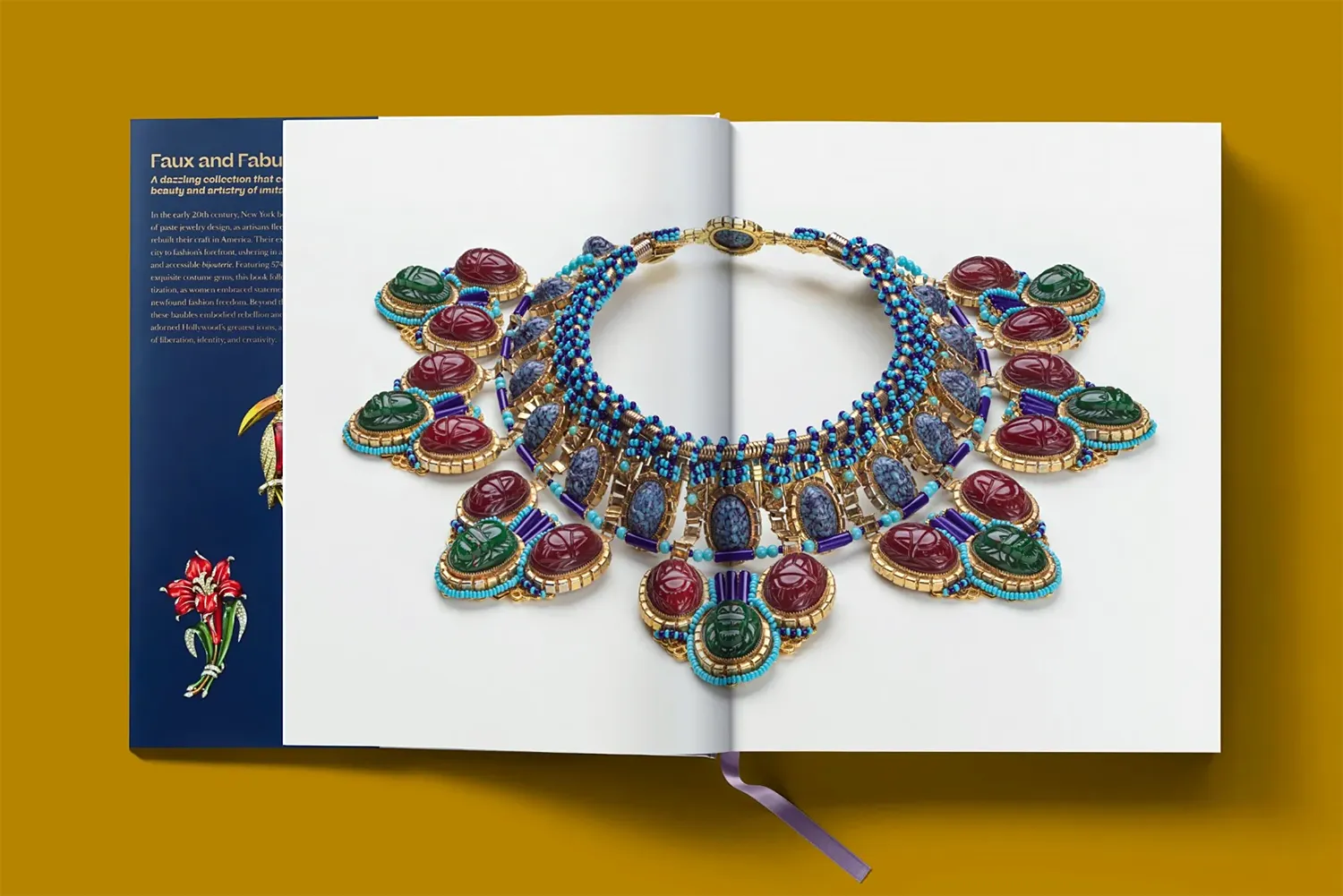
© Taschen Verlag
Rhetoric of Opening
The texts employ a language that emphasizes modernization: new role models and new materials as signs of expanding social participation. This perspective convinces because the objects are embedded within a historical context. At the same time, it follows closely the guiding idea of an “aesthetic democratization.” The notion is appealing, yet it obscures the fact that accessibility in the 20th century was created above all through appearance rather than through actual living conditions. The volume opts for optimism—and does so with style. The tensions within this optimism surface only occasionally.
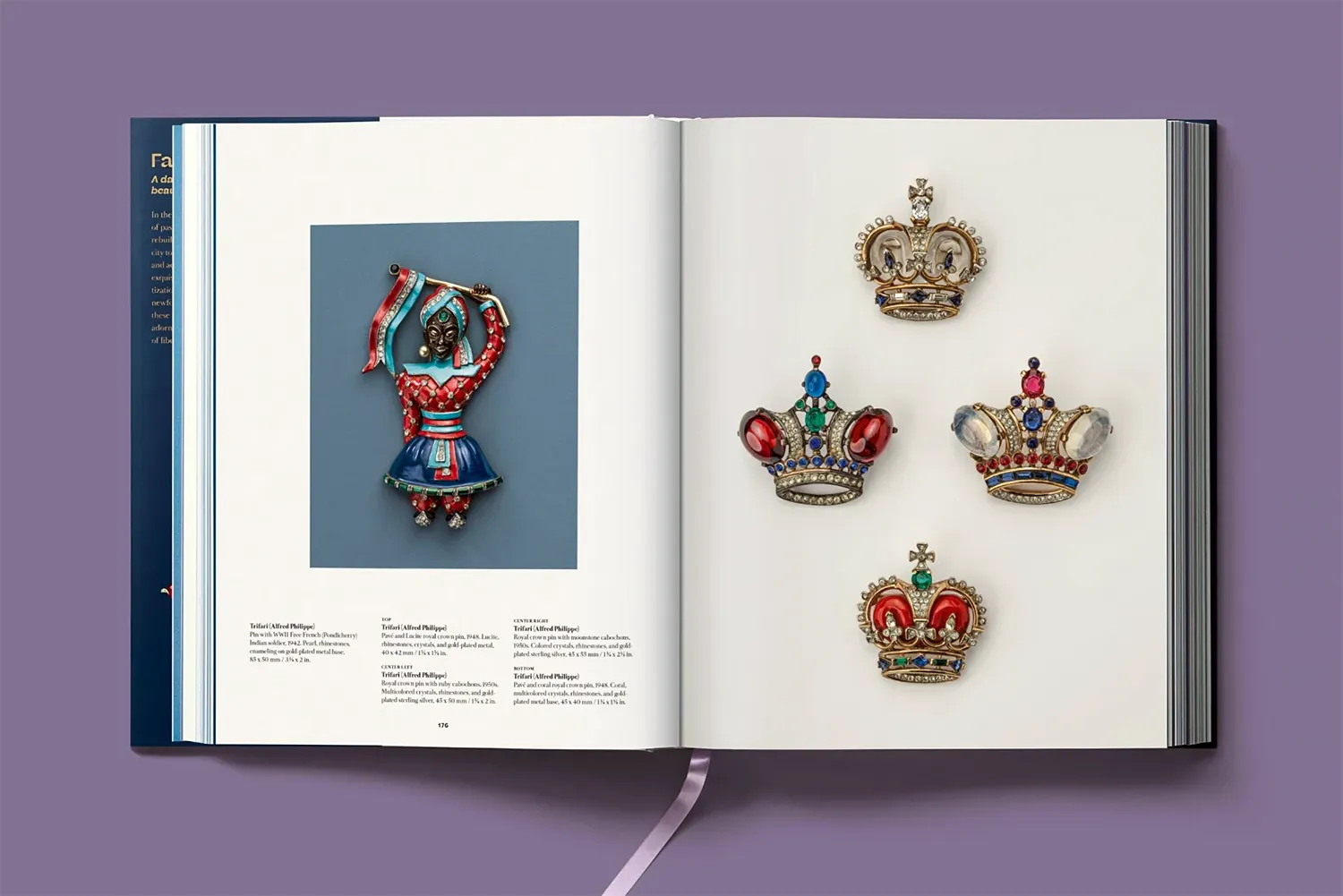
and a selection of ornate crown-shaped pieces.
© Taschen Verlag
Silent Spaces in the Narrative
Equally striking are the aspects that are only touched upon. These include, for example, production conditions, economic pressures, or cultural tensions that shaped many designs. The use of global motifs—from Indian ornaments to supposedly “exotic” forms—appears entirely natural within the book’s visual language. Their historical contexts, however, are only sketched. This does not diminish the fascination of the objects, but it does make clear that aesthetic impact is prioritized. The emphasis is understandable, yet it reveals a perspective that weights aesthetics more heavily than historical complexity.
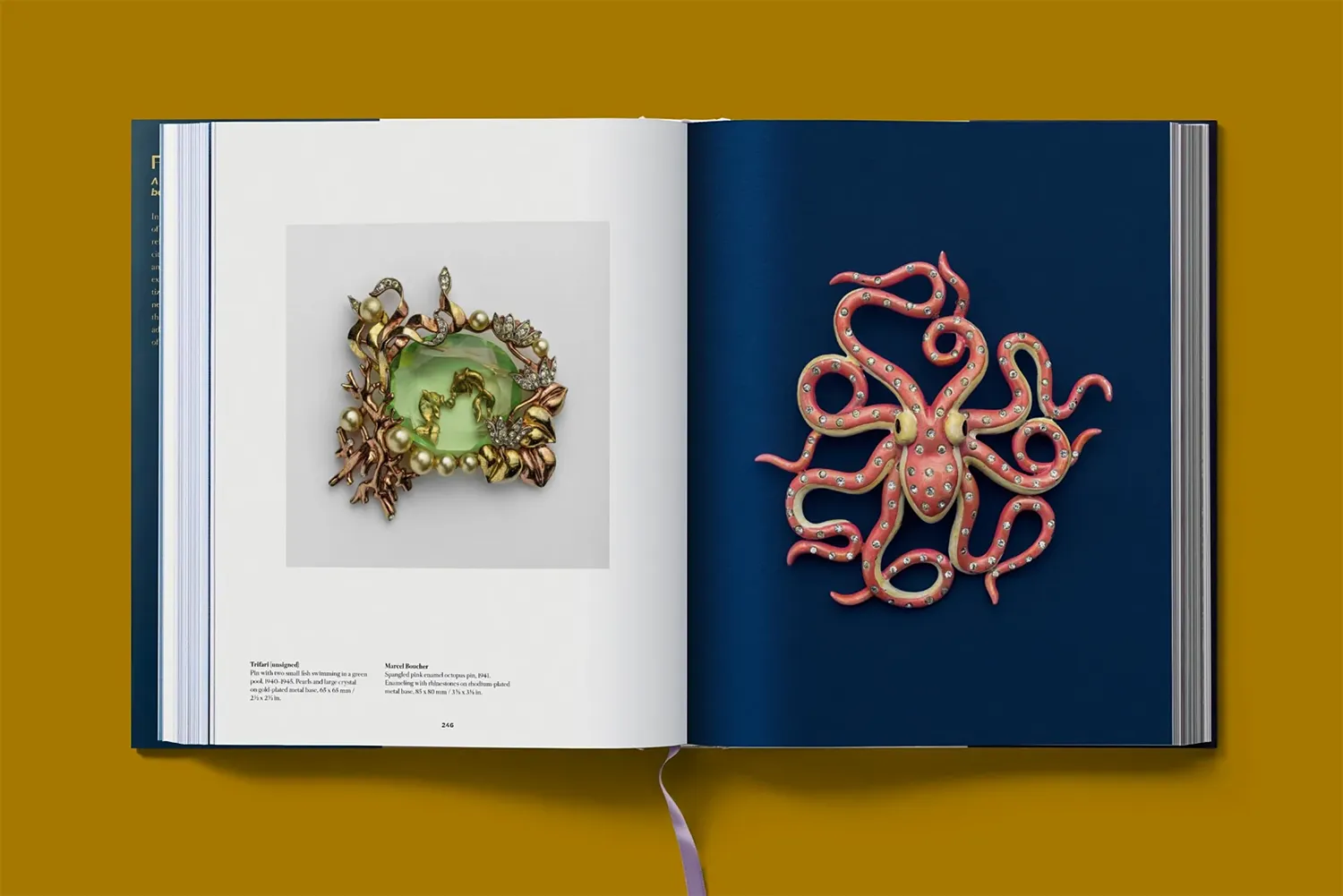
and a coral-colored octopus brooch.
© Taschen Verlag
The Present in the Rearview Mirror
It is precisely this curated clarity that creates a certain appeal: the publication presents an era that believed style could shift social boundaries—a notion that continues to resonate today. The delight in artificial materials, the blend of quotation and invention, and the idea of individuality expressed through accessories all point toward patterns reappearing in the 21st century. As an aesthetic document, the volume is striking; as a historical narrative, it opens interpretive spaces that invite further inquiry—and that is where its impact lies.
Reading Recommendation
Costume Jewelry. TASCHEN, 2025, 528 pages, 100 EUR.