

A book like an engine block: cool, gleaming, precise. “Ferrari XL” does not only want to tell a story but to embody one. It is less a declaration of love than a monument – a testament to the idea of perfection, the thrill of risk, and the aesthetics of the unshakeable.
The Object as Machine
Hardly any book displays its technical origin as openly as “Ferrari XL.” It is an artefact that is not read but started. Pressing on the cover feels like igniting an engine. Large format, red linen, chrome embossing: with this work, Benedikt Taschen has not produced an encyclopaedia but a machine built for admiration. Every page is a controlled explosion of lacquer, metal, and nostalgia. You can feel how much the book wants to be seen – and how completely it dissolves into its own staging. Within this obsession with material lies a confession: this book celebrates less the motion than the surface, the shine instead of the speed.
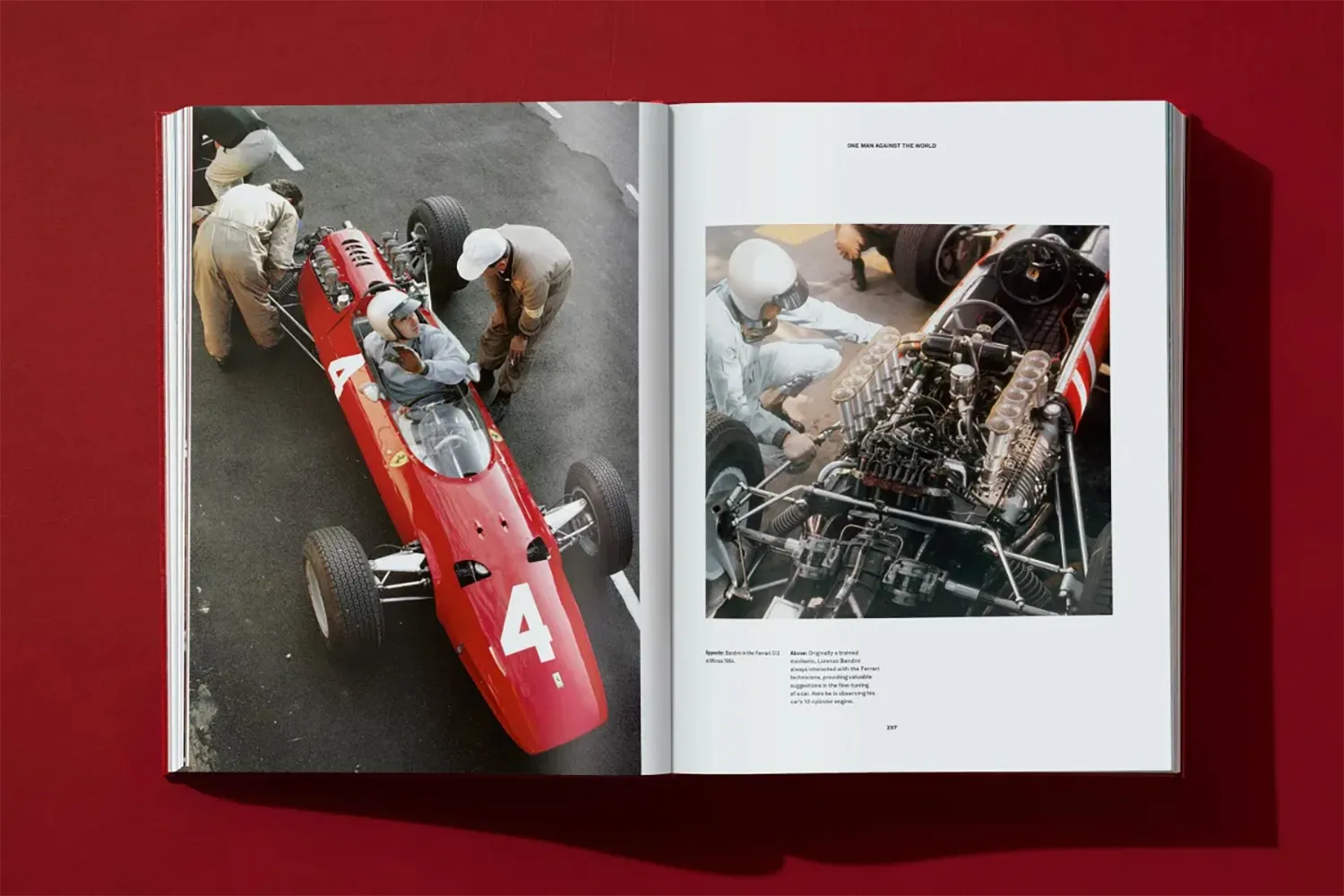
mechanics at work on a classic Ferrari Formula 1 car.
© Taschen Verlag
Myth as Narrative
Pino Allievi and Alessandro Giudice write with the precision of chroniclers but in the tone of priests. They do not describe cars but revelations. Enzo Ferrari appears as a metaphysical figure, half prophet, half tyrant. The language avoids distance; it rhapsodises, invokes, and gilds. At times it sounds as if he were less an engineer than the creator of his own physics. And yet the book remains a document of the longing for control: the beauty of the machine as an answer to life’s unpredictability. While other works grapple with the ambivalence of technological power, “Ferrari XL” transforms it into a form of faith.
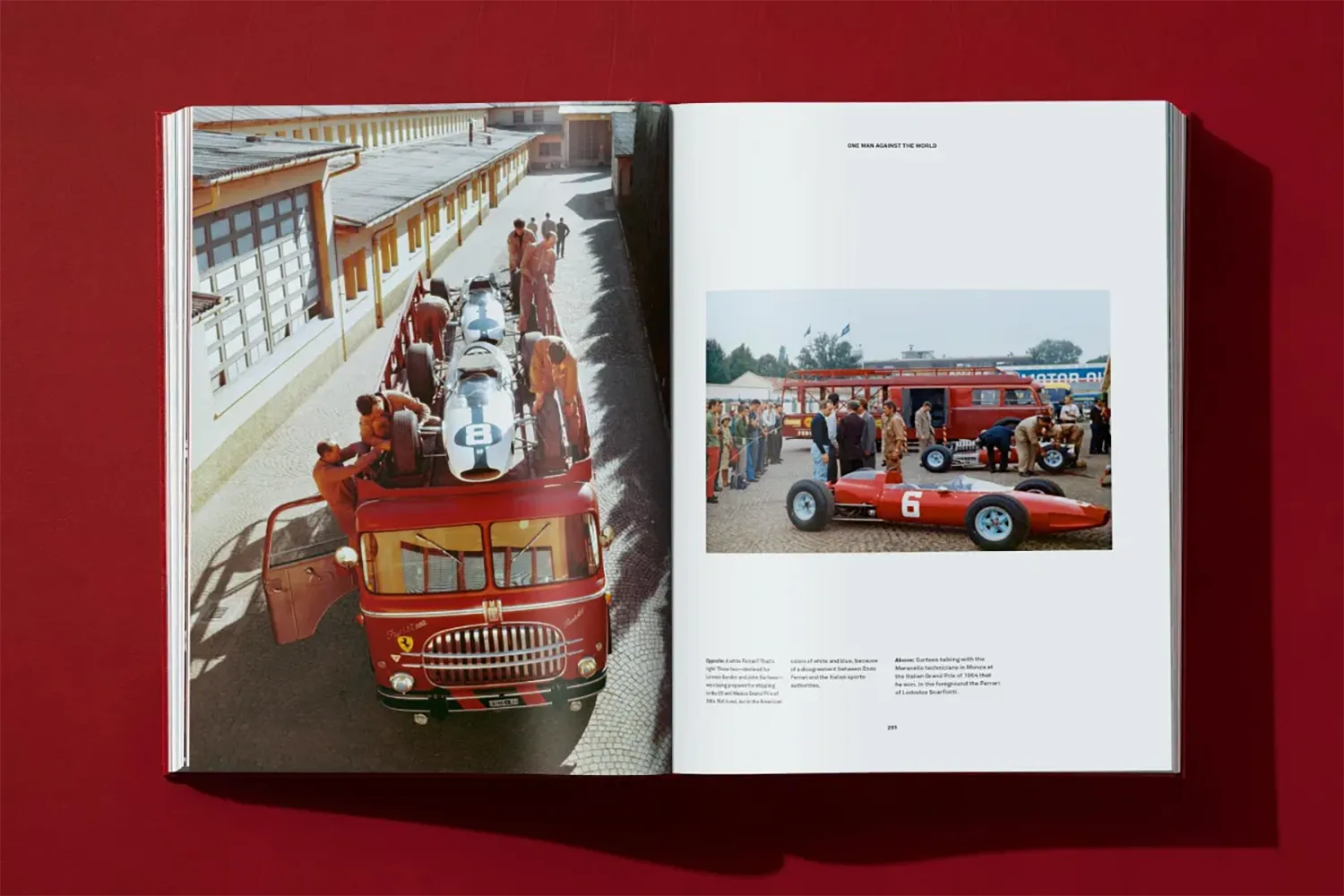
behind Ferrari’s golden era of motorsport.
© Taschen Verlag
The Image as Overwhelm
Renowned photographers such as Rainer Schlegelmilch and Louis Klemantaski deliver icons rather than illustrations. Their images are composed so perfectly that they almost displace reality. Every curve becomes a gesture, every shadow a proof of divine proportions. Ferrari’s work is revered so intensely here that it becomes a mirror of its own worship. This pathos is not innocent, for the book’s aesthetics are the aesthetics of power – a gaze that does not question but triumphs. The pictorial space resembles a museum of the male gaze, where technology and desire blend until they are no longer distinguishable.
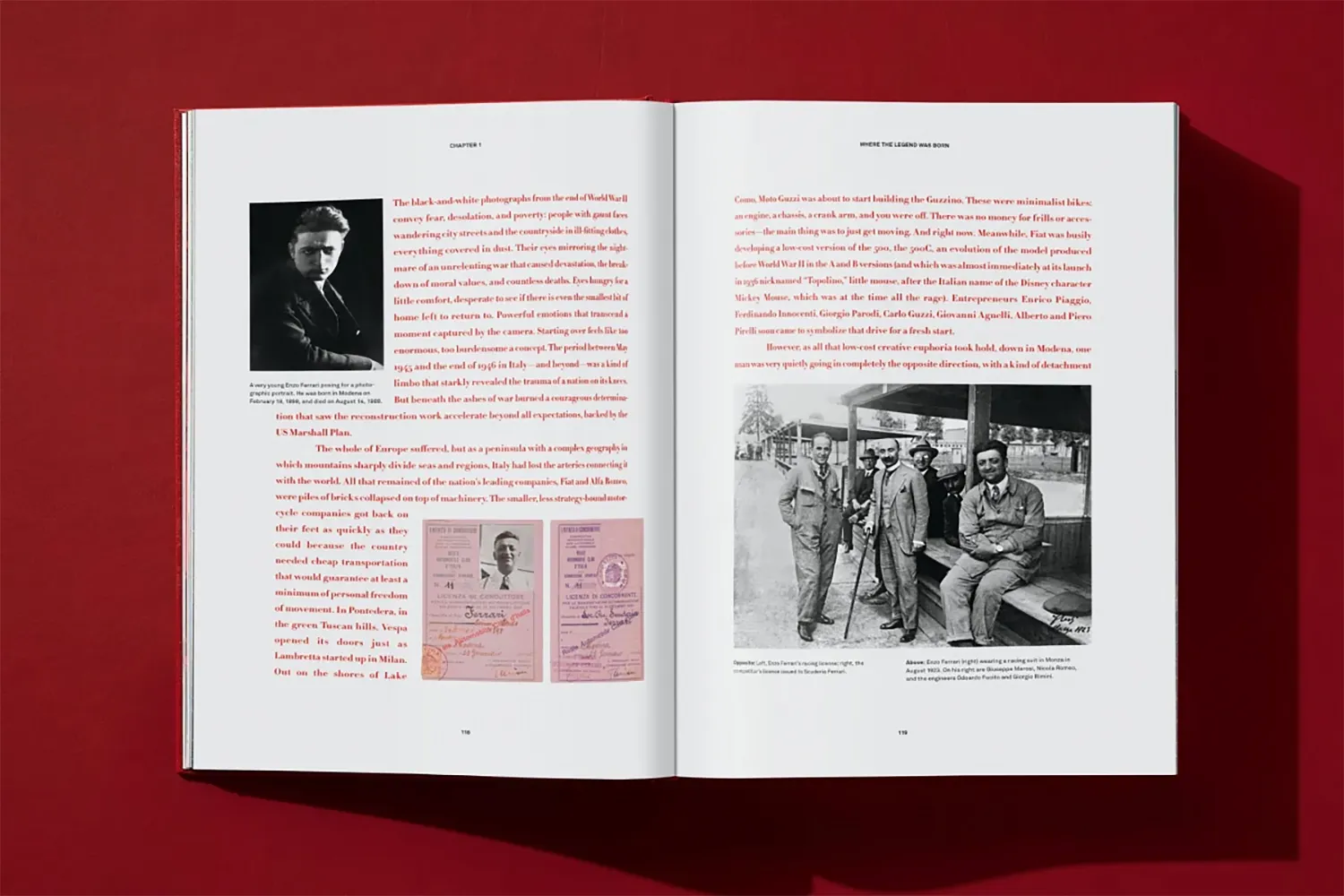
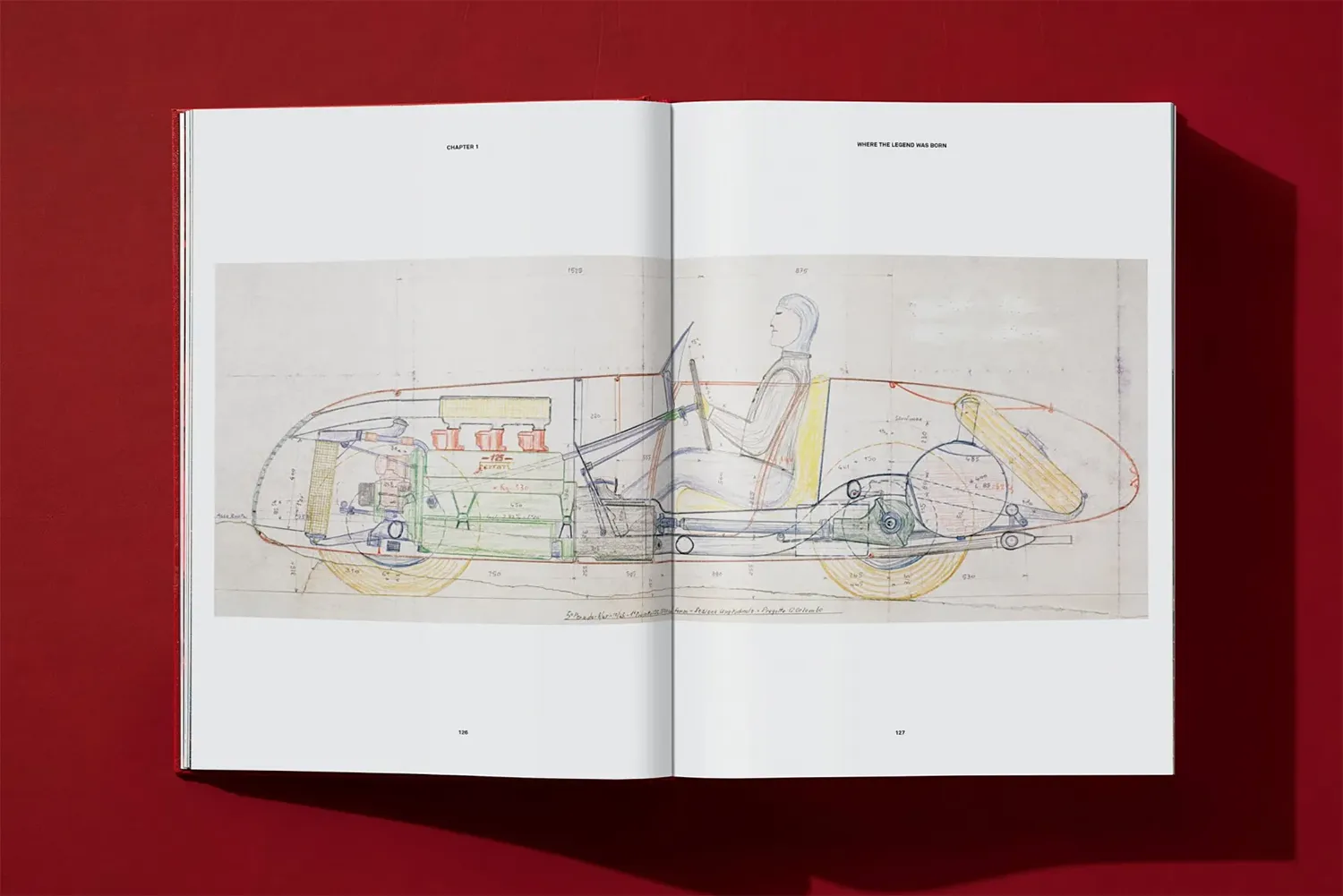
official documents, and early images from Enzo Ferrari’s formative years.
© Taschen Verlag
The Language of Exaltation
Even John Elkann’s foreword reads more like a legacy than an introduction. The grandson of Fiat patriarch Gianni Agnelli recalls how he secretly climbed into his grandfather’s red F40. The roar of the engine became a liturgy for him, a “special thrill” he could never forget. The same pathos runs through the texts by Piero Ferrari, in which the image of the father becomes a distant symbol – untouchable and barely questioned. These voices reflect the self-understanding of a brand that thinks in myths rather than stories.
© Taschen Verlag
Slow Motion of a Fading World
With its opulence, the book pays unwavering homage to its own myth. Everything is performance, elegance, and triumph, free of any trace of scepticism. Every page points to a world in which technology not only worked but embodied an ideal of its own. “Ferrari XL” celebrates the idea of perfection, not its limits. It summons the memory of a vanished era in which progress possessed aesthetic brilliance and provoked no moral conflicts. The significance of the book lies in its documentation of a world shaped by technology that feels foreign to us today – a world in which speed meant more than just a promise.
Reading Recommendation
Ferrari (ed.), Ferrari. TASCHEN, 2025, 688 pages, 125 EUR.