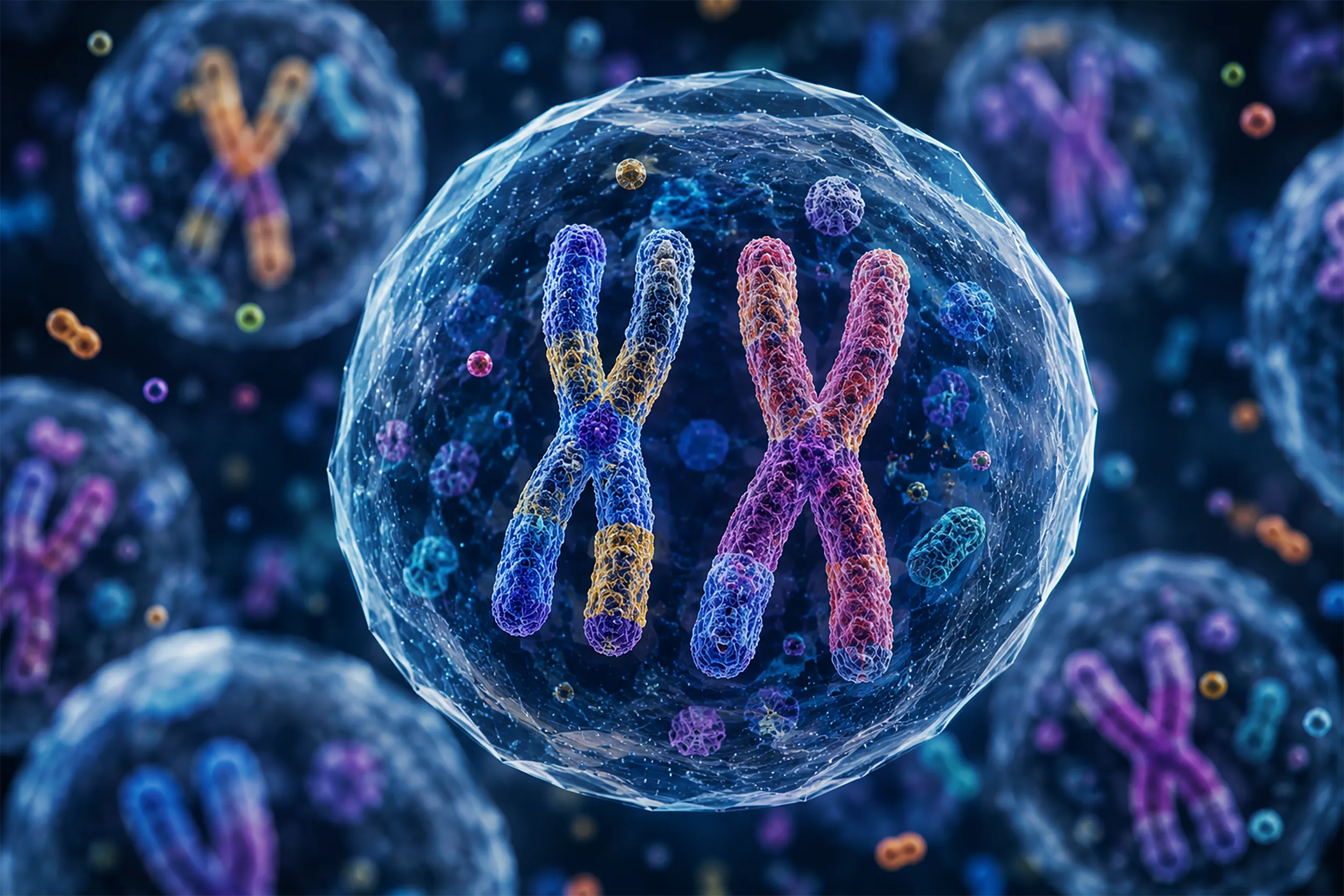

The longevity movement represents less a medical breakthrough than the spread of a mindset that increasingly treats biological limits as technically manageable.
The Abolition of Biological Limits
At first glance, the American entrepreneur Bryan Johnson appears to be an eccentric figure of the present moment. Blood transfusions, daily biomarker analysis and permanent self-monitoring form part of his routine. His body appears less as a natural organism than as a technical infrastructure.
Johnson embodies a logic that extends far beyond the longevity scene itself. Ageing is no longer understood as a biological reality, but as a technical defect. Health ceases to appear as a condition and instead becomes a permanently steerable process. The human body increasingly resembles a system that can be monitored and stabilised.
Behind this idea lies a philosophy deeply rooted in the digital industry. Over decades, software culture has developed around the assumption that systems are fundamentally iterative. Technical problems rarely appear final. Platforms continue to expand, while even errors are usually treated as temporary disruptions. This logic is now being transferred to biology.
The Digital Logic of Control
Artificial intelligence further accelerates this development. The real momentum stems less from individual therapies than from the technical integration of different systems. AI, biomarker analysis, genetics and continuous data collection are increasingly merging into an infrastructure of biological optimisation.
The more powerful data-driven systems become, the stronger the assumption that biological processes themselves can be calculated and optimised. The human body increasingly appears as a technically readable system. Biology is thereby pulled into the logic of technological control.
Biology does not function like software. It cannot be reorganised without material consequences. This is precisely why many biotechnological promises collapse in clinical trials under the contradictions of the organism itself.
The Limits of Biological Control
Even comparatively limited problems remain unresolved. Hereditary hair loss persists despite decades of research. Deep skin injuries still fail to regenerate completely and usually heal as scar tissue. Nerve damage and organ ageing continue to mark the limits of medical control.
The human organism does not repair itself perfectly. It stabilises itself improvisationally.
Evolution did not optimise the body for maximum durability. It merely produced systems capable of functioning long enough to ensure survival and reproduction. Regeneration and cellular control often exist in direct tension with one another. Aggressive forms of cellular rejuvenation therefore frequently increase the risk of cancer at the same time.
The ideology of the longevity movement systematically underestimates these contradictions because it remains shaped by a digital worldview. Software can be continuously modified. Errors leave behind no irreversible material damage. Biology, by contrast, is based on unstable equilibria and competing demands.
Death as an Economic Boundary
Nevertheless, the longevity industry continues to expand at enormous speed. Biomarker systems, AI diagnostics, cell therapies and personalised medicine all follow the same economic logic: lifespan should become technically manageable. Death increasingly ceases to appear as an unavailable boundary and instead becomes framed as a technically solvable defect. This is precisely where a new market emerges.
At the centre lies not the treatment of individual diseases, but the extension of biological performance itself.
The geopolitical implications of this development remain widely underestimated. Discussions surrounding life extension no longer take place solely within Silicon Valley circles. Once states begin treating biological performance as a strategic resource, the relationship between power and time begins to shift. The logic of technological optimisation thereby moves from machines and platforms to the human organism itself.