


At the Grand Palais, Chanel tells a story of caterpillars and butterflies, of transformation and freedom. Above the runway, brightly colored cranes rise into the space, promising change. The fashion beneath them remains surprisingly restrained.
For his second ready-to-wear collection, Matthieu Blazy reaches deep into the archives of the house of Chanel. Tweed, suits, straight skirts and structured jackets open the show—familiar elements that have formed the backbone of the house for decades. Zippers occasionally replace classic buttons, and knitwear loosens the construction. They remain small shifts within a system.
As the show progresses, the materials change slightly. Knitwear meets tweed, while flowing fabrics encounter structured surfaces. Under the lights of the spotlights, threads of lurex occasionally flash. Shirts are layered under jackets, dresses placed over skirts. The layering creates movement without producing a real break. The promised transformation remains more of a decorative motif than a formal strategy.
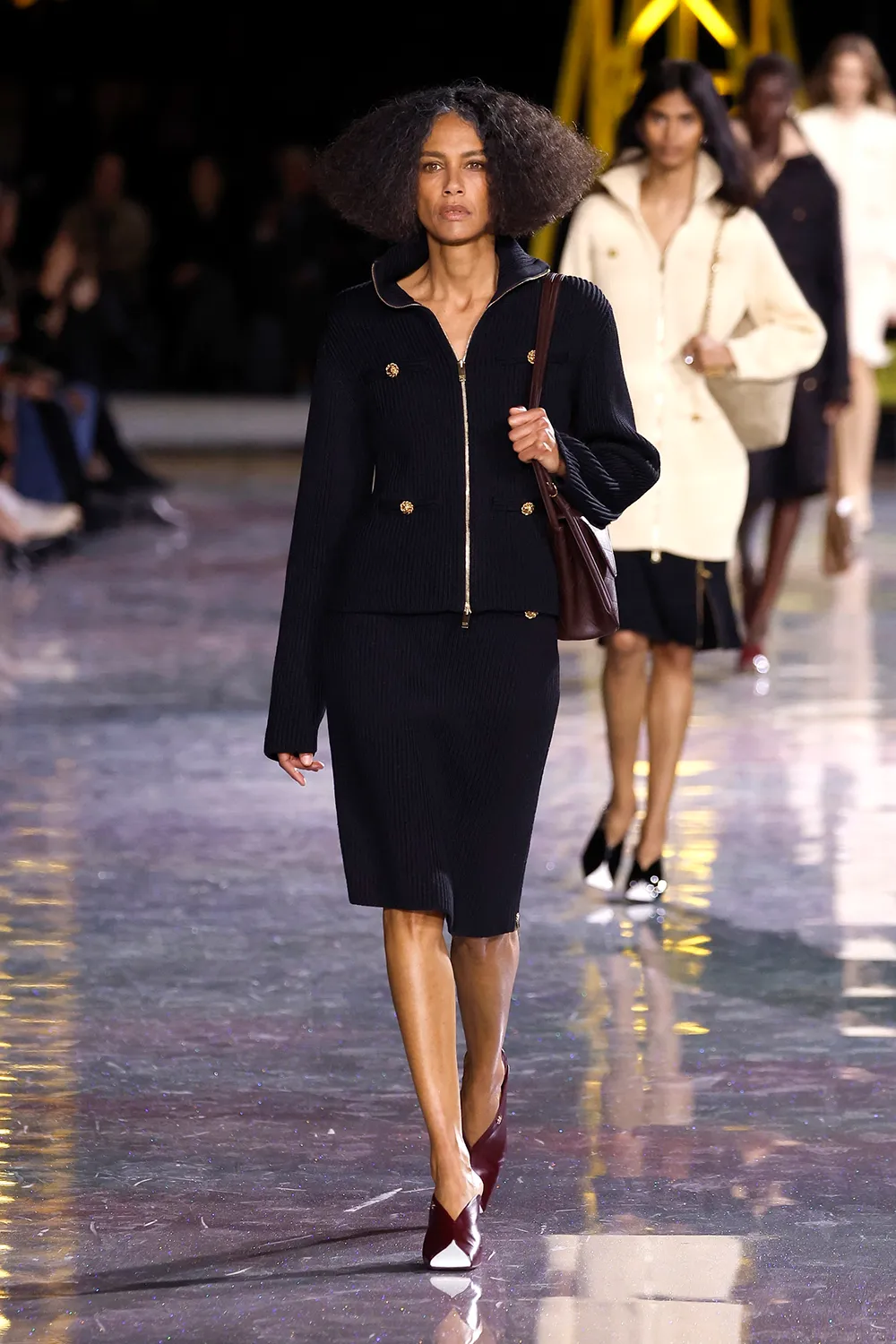
during the Chanel Ready-to-Wear Fall/Winter 2026 show at the Grand Palais in Paris.
Photo: NOWFASHION.com
The silhouettes also remain restrained. The waist occasionally drops slightly, the torso lengthens and the skirts move more freely, yet radical changes do not occur. Instead, what emerges is variation. Chanel continues to operate within a familiar terrain of mid-lengths, calm proportions and controlled elegance.
The real paradox lies within the house itself. Chanel lives through its codes: tweed, chains, pearls and the suit as a symbol of female autonomy. These signs may evolve, but only cautiously. The designer therefore moves within a narrow corridor between innovation and recognizability.
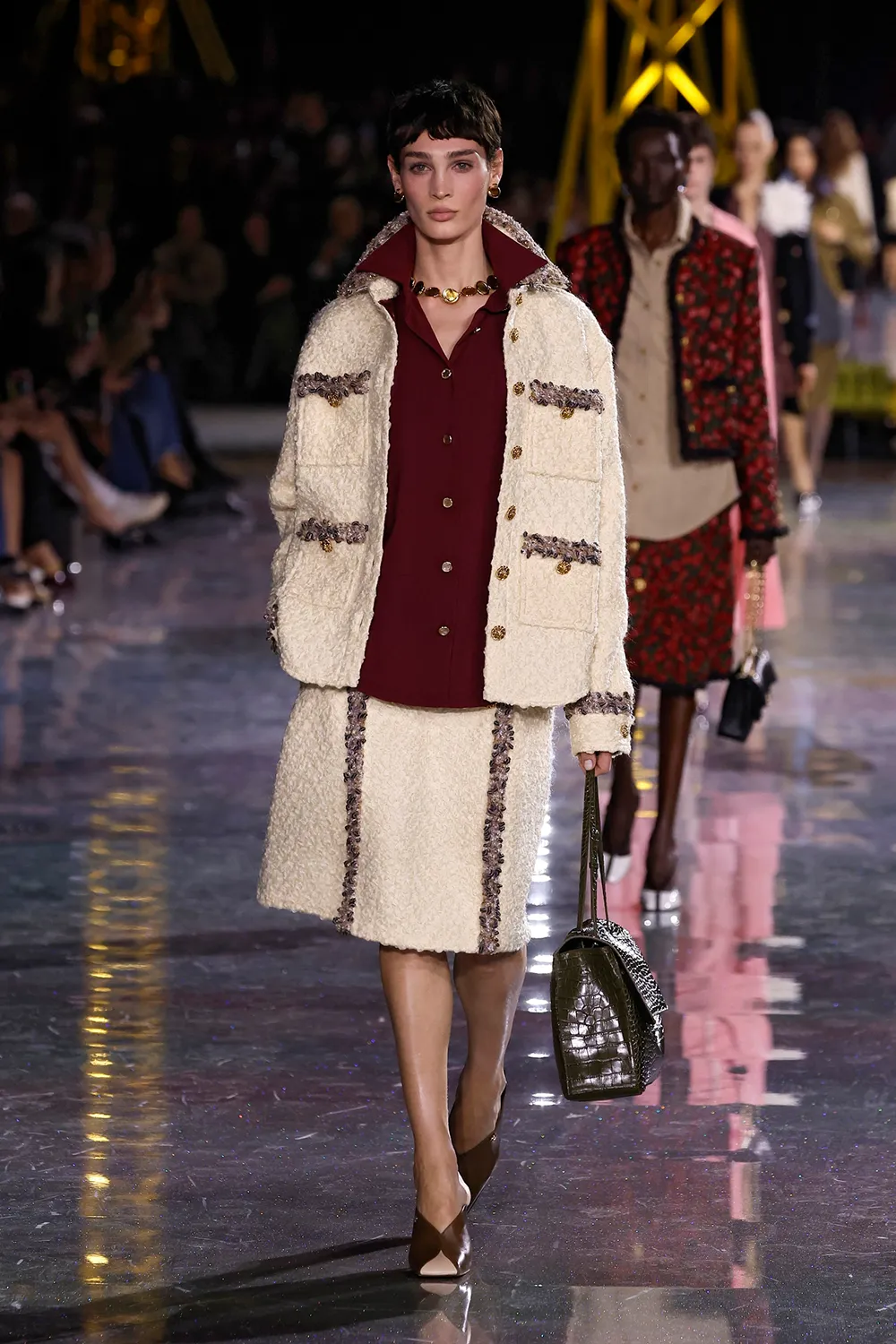
Chanel Ready-to-Wear Fall/Winter 2026 show at the Grand Palais in Paris.
Photo: NOWFASHION.com
Blazy seems to understand this boundary precisely. In his collection he attempts to give the Chanel vocabulary greater flexibility rather than replace it. Knitwear occasionally substitutes rigid tailoring, colors appear more self-assured and the materials feel lighter. Yet the shifts remain controlled. The brightly illuminated cranes in the Grand Palais promise movement. The collection presented beneath them, however, remains remarkably stable.